
Family Art Workshops in Dubai: Prices, Ages and Materials
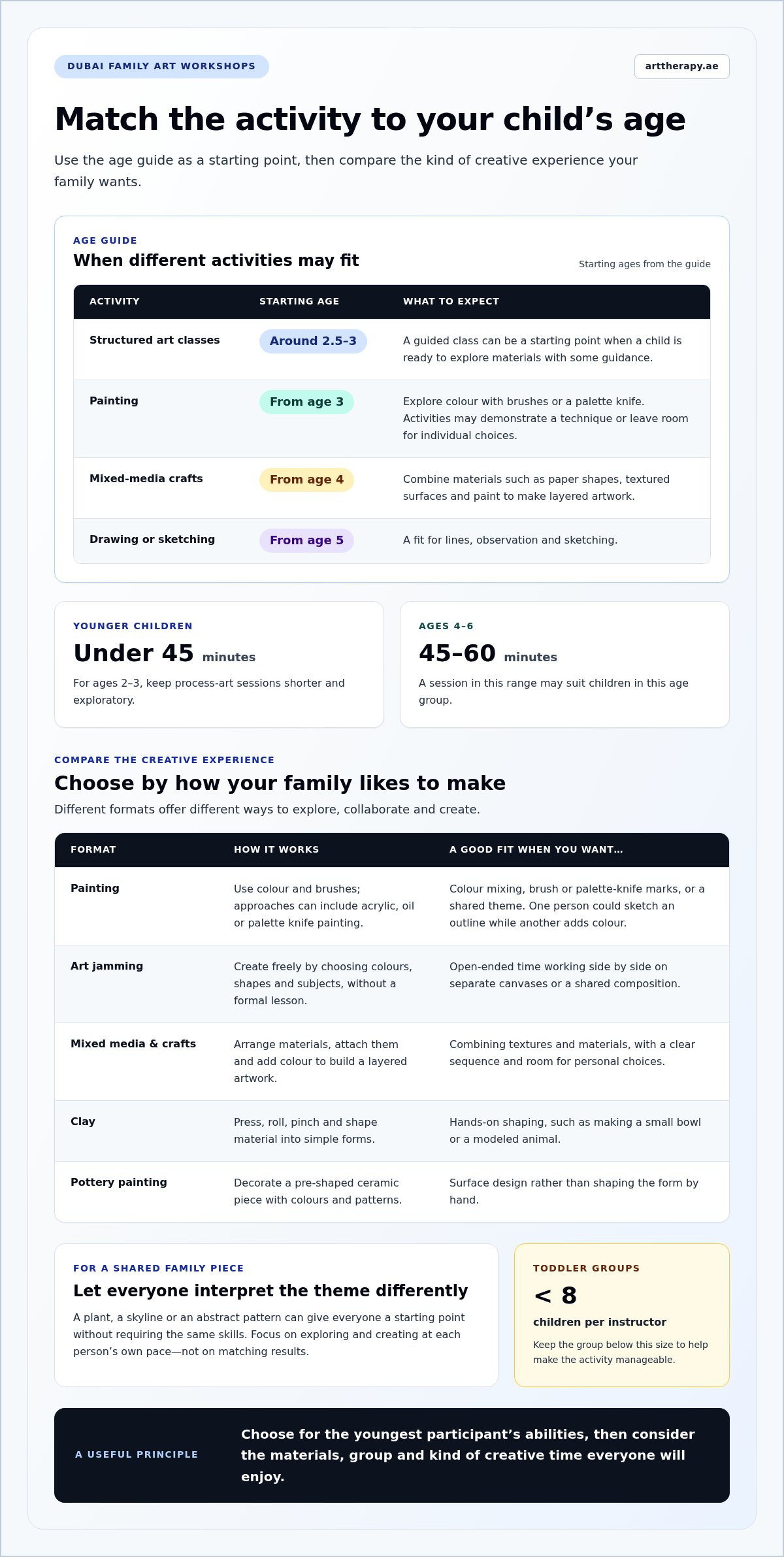
Children can start structured art classes in Dubai at around 2.5-3 years, while painting is generally suitable from age 3, mixed-media crafts from age 4, and drawing or sketching from age 5. For a family art workshop in Dubai, the best starting point depends on the activity and whether your child is ready to explore materials with a little guidance. For ages 2-3, keep process-art sessions under 45 minutes; sessions for ages 4-6 can last 45-60 minutes.
It’s natural to want an activity everyone can enjoy, without overwhelming younger children or feeling too simple for older ones. A good workshop lets family members create at their own pace, focusing on exploring rather than making a perfect finished piece.
This guide explains how to choose an activity by age, what session lengths may suit different children, and what to look for in materials, booking details, location and opening hours. You’ll also learn how workshop pricing is shaped, so you can compare options with a clearer sense of what matters for your family.
Table of Contents
Painting, drawing, clay, crafts and process art
A family art workshop in Dubai can bring different ages together through paint, drawing, clay, and mixed media. Choose by the experience you want: guided technique, open-ended making, or a shared project.
Painting and Drawing Activities
Painting gives children colour, brushes, and a surface for experimenting. Painting classes are suitable from age 3, while drawing and sketching are better suited to children aged 5 and older. Look at whether the activity follows a demonstrated technique or lets each person make independent choices. Acrylic painting, oil painting, and palette knife painting each offer different ways to build an image.
For a shared painting, choose a theme everyone can interpret in their own way, such as a plant, a skyline or an abstract pattern. One person might sketch an outline while another adds colour. This gives younger and older participants ways to contribute without needing the same skills.
Art Jamming Experiences
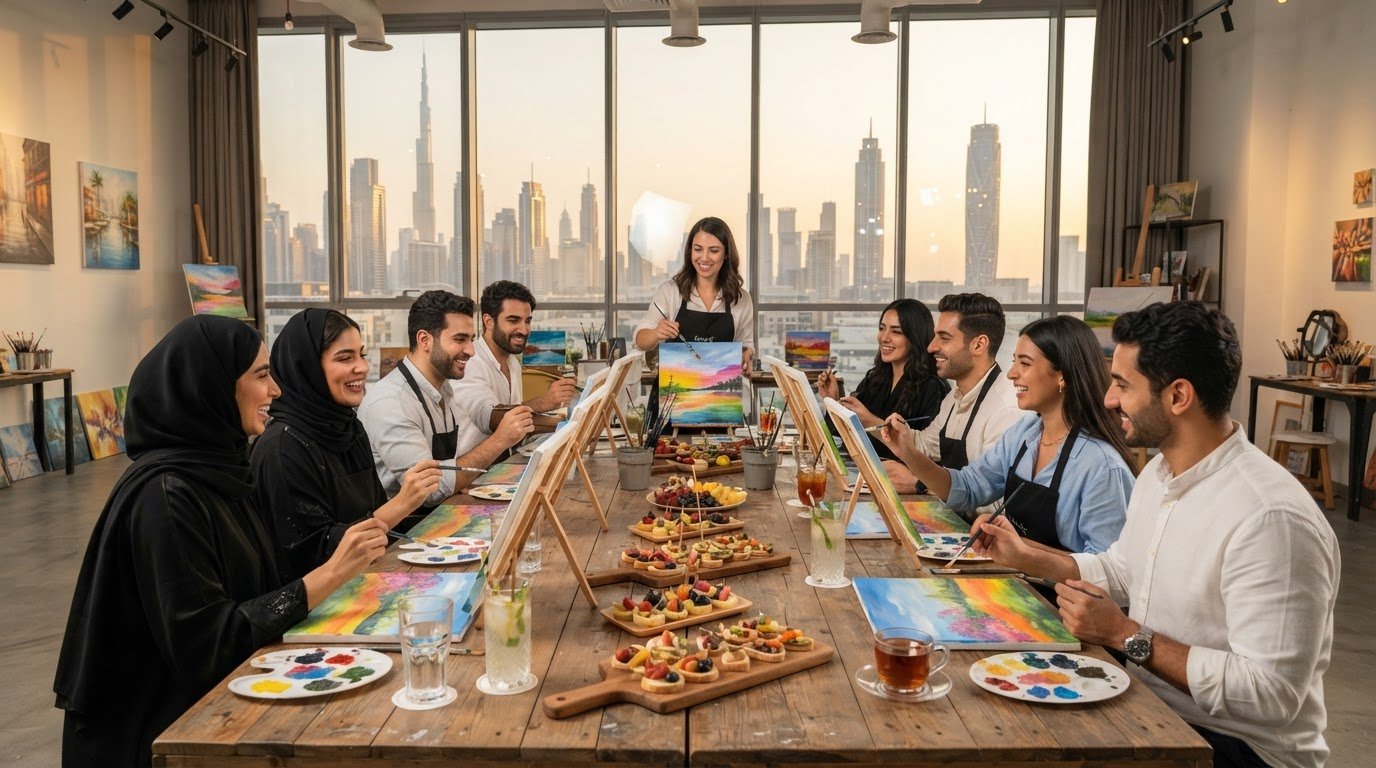
Art jamming usually centres on creating freely rather than following a formal lesson. Participants can choose colours, shapes, and subjects, then work side by side on separate canvases or a shared composition. Before booking, consider whether your family prefers quiet individual work or a group piece that encourages conversation and collaboration.
You can agree on a loose theme, such as desert colours or family memories, then let each person interpret it. The finished works may look different, and that variety is part of the experience. Focus on the process, not matching results.
Mixed-media and craft activities suit children from age 4. These projects combine materials, such as paper shapes, textured surfaces, and paint, to create layered artwork. Check the activity description for the main steps, such as arranging pieces, attaching them, and adding colour. A clear sequence can help children stay engaged while leaving room for personal choices.
Clay offers a tactile alternative to flat artwork. Children can press, roll, pinch, and shape the material into simple forms, such as a small bowl or a modeled animal. Pottery painting takes a different route: participants decorate a pre-shaped ceramic piece using colours and patterns. The first focuses on shaping; the second centres on surface design.
Match the activity to the kind of making your family enjoys:
Choose drawing for lines, observation, and sketching.
Choose painting for colour mixing and brush or palette-knife marks.
Choose clay for shaping forms by hand.
Choose crafts or mixed media for combining textures and materials.
Choose art jamming for open-ended, shared creative time.
For a first visit, choose one workshop format before deciding on a theme. That makes it easier to plan around the activity and understand what the session will involve.
Booking considerations, materials and group size
Plan around the activity, participants, materials, and the kind of gathering you want. A little preparation helps keep the creative time focused and comfortable.
Accessibility depends on the venue layout and the activity’s physical demands. Safety guidance should match the materials used, since paint, clay, and resin each involve different handling considerations.
Private Groups and Birthday Parties
A private birthday gathering can centre on one shared activity, such as painting a canvas or decorating a group theme. Choose a format that suits the guests’ ages and comfort with the materials. Before settling on a plan, map out who will participate, the activity each person will make, and how finished pieces will be carried home.
Group Event Planning
For a family gathering or team event, decide on the activity and participant mix first. Then consider the space needed for working, moving around, and setting artwork aside to dry. For toddler groups, keep the group below 8 children per instructor. This helps keep the activity manageable and gives the instructor room to guide the group.
Accessibility and Participation Requirements
Think through the practical steps of the activity: sitting at a table, reaching materials, handling tools, and cleaning up. If a participant needs a different setup, consider whether the activity can be adapted without changing its essential steps. For children, plan suitable adult support and explain the handling instructions before materials are shared.
Materials are part of the family art workshop dubai experience. Art Therapy Dubai’s teacher guides participants through the chosen technique, with a selection of techniques and ideas to explore. Workshops are designed for people without drawing experience, so families can focus on creating rather than arriving with prior skills.
Choose an activity that fits the youngest participant’s abilities.
Estimate the group size and identify the adult support needed.
Consider access needs, materials, and workspace requirements.
Set a date and plan travel around the venue’s location and schedule.
Arrange how artwork and personal belongings will be taken home.
For birthdays, a private group can make the artwork part of the celebration rather than a separate activity. A shared colour theme, for example, gives guests a starting point while leaving each person free to make their own piece. For workplace gatherings, a collaborative canvas can create a common focus without requiring identical results. If you’re planning a private creative gathering, explore private event options as a possible next step.
Also account for the materials’ handling and cleanup. Keep drinks and personal items away from the work area, and leave room for wet or unfinished pieces. When guests have different ages or abilities, choose an activity with flexible ways to participate, such as selecting colours, arranging components, or making marks. These small planning choices help each person take part in a way that feels manageable.
Studio location and opening hours
In Dubai, location and session timing can shape how easily your family enjoys a family art workshop dubai. Art Therapy is close to Mall of the Emirates, a convenient three-minute walk from Equiti Metro Station.
Weekend and school-holiday plans depend on each studio’s published session schedule. Choose a listed date and time that fits your family’s travel and daily routine.
Jumeirah is one area families may consider for art classes. Structured classes there generally start from age 2.5 years, although some studios accept children only from age 4. If you’re comparing a Jumeirah session with one elsewhere in Dubai, weigh the child’s age alongside the route and activity format.
Plan the journey before booking. Art Therapy is a three-minute walk from Equiti Metro Station, close to Mall of the Emirates. Consider where you’ll start from and allow time for the trip, especially when travelling with young children. Keep your booking details accessible for arrival.
Opening hours and workshop times aren’t always the same thing. A venue’s general operating hours may differ from its scheduled class sessions, so use the session time as your main planning point. If the workshop begins after school or during a holiday, allow time for parking, finding the entrance, and settling children before the activity starts.
Use this simple location-and-time plan:
Choose a Dubai area that works with your starting point.
Compare the workshop date with school, work, and family plans.
Save the address and session details for travel day.
Allow time to arrive, settle in, and find the studio space.
Plan the return journey around children’s routines.
For a Jumeirah visit, check the child’s age against the class’s stated starting age. The area’s general starting point is 2.5 years, but some studios set a higher minimum of age 4. This difference matters when siblings are at different stages. A suitable plan may mean selecting an activity that both children can join, rather than choosing by neighbourhood alone.
Weekend and school-holiday sessions can be useful for families balancing school and work commitments. Match the session date to your calendar first, then consider the travel time and opening schedule. A morning activity may fit differently from an afternoon plan, especially when you’re travelling with younger children. Keep the day unhurried by building in time before and after the workshop.
Location is more than the district name. The route, arrival arrangements and workshop time all affect the day. Keep your booking details accessible and make sure everyone knows where to meet. A calm arrival gives your family more time to settle into the creative activity.
Suitable starting ages and session lengths
Children can begin structured art classes in Dubai around ages 2.5-3. Painting suits children from age 3, while workshop schedules and session lengths depend on the activity and age group.
Suitable Starting Ages
For drawing and sketching, age 5 is a useful starting point. Mixed-media and craft activities suit children from age 4, while painting classes suit children aged 3 and older. Structured classes usually begin around ages 2.5-3. These ranges help narrow choices, but the activity’s steps matter too. Choose a format your youngest participant can comfortably follow.
For a family with different ages, look for flexible ways for everyone to take part. A younger child might focus on colours while an older sibling explores the technique in more detail. Everyone can work from one theme while making individual choices, so the activity feels shared without expecting identical skills.
Workshop Session Lengths
For children aged 2-3, process-art sessions are recommended to last 30-45 minutes. Art sessions for ages 4-6 can last 45-60 minutes. These ranges provide a practical guide when comparing options. Consider how much time the activity needs for setup, making, and tidying, not only the time spent creating.
Age and activity type work together. Process art gives younger children room to explore materials without requiring a complex finished piece. For ages 2-3, keep sessions under 45 minutes. A short activity can focus on one simple action, such as making repeated marks or pressing shapes into paint. For older children, a longer session can allow more stages.
Duration can also change how a family plans the day. A 30-minute activity leaves more space for travel and breaks, while a 60-minute session asks children to stay engaged longer. For ages 4-6, the 45-60-minute range can accommodate a sequence, such as choosing colours, creating, and viewing the finished work. Build in a pause if children need one.
Workshop schedules are set by each studio. Compare the published date and start time with school, family routines, and travel plans. Then match the session length to the youngest participant’s needs. A child aged 2-3 may find a 30-45-minute process-art session more manageable than a longer class. For an older child, a 45-60-minute activity may allow room for several creative steps.
Use this quick guide when comparing age and duration:
Ages 2-3: process art, 30-45 minutes; keep the session under 45 minutes.
Age 3 and older: painting activities.
Age 4 and older: mixed-media and craft activities.
Ages 4-6: art sessions lasting 45-60 minutes.
Age 5 and older: drawing and sketching activities.
For siblings, consider the youngest child’s age and attention needs, then choose a workshop that gives everyone room to create in their own way. A shared activity can bring siblings together even when their ages and approaches differ.
Workshop prices and included materials
Compare the workshop format, materials, and booking terms before choosing. These details help you understand what the fee covers.
Workshop Prices
Workshop prices depend on the activity, group size, session format, and materials involved. A private session and a group booking can have different requirements. The price for a workshop is tailored to the case and given after a quote request. Consider the planned activity, participant numbers, and level of guidance when comparing options.
A quote request is useful when your family has a specific plan. For example, a group choosing acrylic painting may need a different setup from one choosing 3D texture art. Share the activity, participant mix, and event format so the quote reflects the planned session. The number of participants and the materials required are key cost factors.
Included Materials
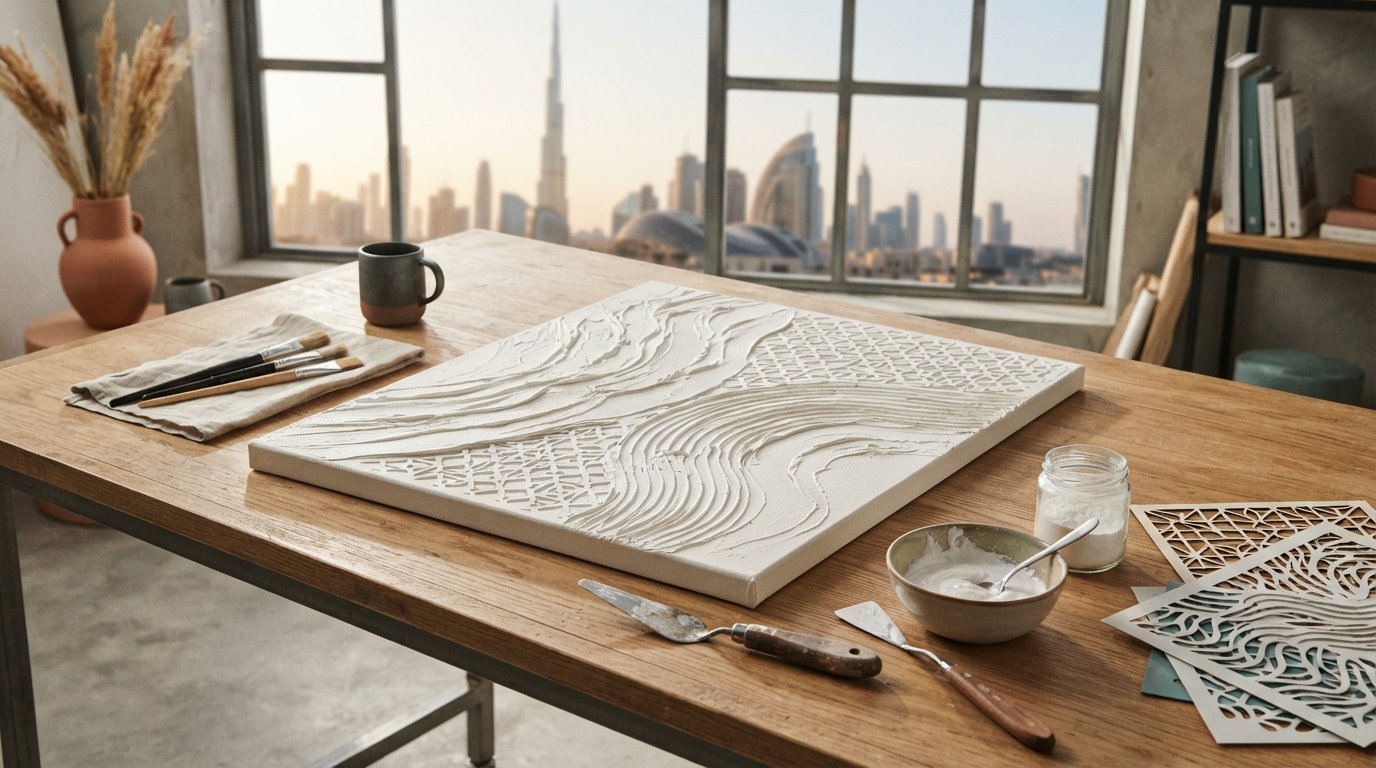
Materials vary by medium. Acrylic painting uses paint and a surface, while oil painting involves a different paint medium. A 3D texture activity may use tools for building raised marks. Review the workshop details for the materials included and any preparation needed, such as clothing suitable for a hands-on activity.
Separate the creative materials from practical supplies. A painting session may involve brushes, a canvas or another surface, and paint. A texture project may require tools for applying or shaping material. These examples describe the medium, not a guarantee that every item is supplied. Knowing the materials list helps you plan without bringing unnecessary items.
Use these steps to compare workshop costs and materials:
Choose the activity, such as acrylic painting or oil painting.
Decide whether the booking is private or shared.
Count participants and note their ages.
Review which creative materials the session includes.
Note any clothing or transport needs for completed artwork.
Also consider how the medium affects the finished piece. A flat painting is easier to carry than a work with raised texture. If your family chooses a 3D texture activity, plan how to transport the artwork carefully. For paint-based sessions, comfortable clothing can make hands-on participation easier. These practical details help you compare the full experience, not just the activity name.
Before booking, write down the activity, participant count, and preferred format. This gives the quote request useful context and helps clarify the materials for your chosen session. Request a tailored art workshop quote for your family’s planned activity.
Art Therapy: Resin Art Workshop
Art Therapy offers a Resin Art Workshop for families drawn to colour, pattern, and the transformation of materials into finished artwork. It can suit families seeking a hands-on activity with a distinct creative process. For a different approach, Acrylic Painting, Oil Painting, and 3D Texture Art workshops offer other ways to explore paint and surface.
Choose based on the experience your family wants: resin art for experimenting with colour and composition, painting for working with brushstrokes, or 3D texture for raised details. The focus is on making, exploring, and discovering each person’s own approach, rather than producing matching results.
To discuss a suitable workshop for your family, contact Art Therapy.
Make Space for a Creative Day Together
A shared creative activity can become part of how your family remembers a day in Dubai. Let each person bring their own ideas to the table, without needing everyone to make the same thing. The colour choices, small discoveries and conversations along the way can matter as much as the finished artwork.
As you choose a family art workshop in Dubai, think about the experience you want to share. ART Therapy Dubai offers resin art, acrylic painting and oil painting workshops, each giving your family a different way to explore creative techniques.
Let your next step be simple: choose the activity that feels right for your family, then plan a visit around it. Contact Art Therapy to plan your visit, and give everyone room to create in their own way.
Frequently Asked Questions
What family art workshops are available in Dubai?
Dubai families can choose resin, acrylic, oil, fluid, alcohol ink, palette knife, and 3D texture art workshops. Kids’ art workshops, private birthday parties, and corporate team-building events are also available. A family art workshop in Dubai can be planned around a selected technique and date, with participants creating their own work. The range lets families choose between painting, texture, and fluid techniques for a shared creative outing.
Which Dubai art workshops welcome children and adults together?
Families can take part in creative workshops designed for people without drawing experience, making them approachable for adults and children creating together. Kids’ art workshops offer another option when the activity is intended for younger participants. For a mixed-age family, choose a shared technique and let each person approach it at their own pace. Private birthday packages can also bring relatives together around one creative activity.
Where are family art workshops located in Dubai?
ART Therapy Dubai is a three-minute walk from Equity metro station, close to Mall of the Emirates. The location is convenient for families planning a visit by public transport. Save the studio location before leaving and allow time to walk from the station. Weekend workshops are available, giving families another way to fit a creative session into their Dubai plans.
How much do family art workshops in Dubai cost?
Outdoor events from 20 people have no additional payment. Events for 20 people receive a 10% discount, while events for 30 receive a 15% discount.
What is included in the workshop fee, such as materials or refreshments?
The workshop includes materials, teacher instructions, and a selection of techniques and drawing ideas. Sessions last 2-3 hours, depending on the technique, followed by an additional hour for a buffet. Families can choose the creative approach before attending, then use the teacher’s guidance to work through the activity. Additional décor, catering, and balloons are optional add-ons, rather than required parts of the workshop.
How do I book a family art workshop in Dubai, and what are the cancellation rules?
Choose a technique and date, then arrange the booking at least 2 weeks before a private event. For cancellations, review the terms provided for your specific booking before confirming, since the cancellation rules depend on those terms. If you’re planning a birthday, leave enough lead time to coordinate the group and event format. Optional décor, catering, and balloons can be arranged as add-ons to suit the celebration.
Which Dubai family art workshops are best for beginners or different age groups?
Workshops are designed for people without drawing experience, so beginners can join without prior art skills. For children, painting classes generally suit ages 3 and older, mixed-media crafts age 4 and older, and drawing or sketching age 5 and older. Younger children can explore process art in shorter sessions. Choose a technique that gives each family member a comfortable way to participate, rather than expecting everyone to create at the same level.

Comments